
That slip your child brings home after a school screening usually just says “pass” or “needs follow-up.” It feels like solid information, but it only covers one narrow test: reading letters off a chart from a set distance.
A children’s eye exam checks dozens of things a screening never touches, and that gap matters more than most parents realize. A school screening can’t replace a comprehensive eye exam, because it only measures a small slice of how your child actually sees.
Once you know what’s missing, you can decide when it makes sense to book a full exam instead of waiting for a note to come home.
What a School Vision Screening Actually Checks
Most school screenings follow the same basic script. A child stands at a set distance, reads letters off a chart, and either passes or gets flagged for follow-up.
That’s about it. The screening doesn’t check how well your child’s eyes work together, how quickly they switch focus between the board and a notebook, or how smoothly their eyes track across a line of text.
A child can read every letter on that chart and still struggle through a full day of reading, writing, and copying notes. A comprehensive eye exam covers a much wider range of checks than any screening includes.
What a Comprehensive Eye Exam Catches That Screenings Miss
A comprehensive exam digs into other areas a screening skips entirely, such as how your child’s eyes work as a team and how they move.
Eye Teamwork and Focus
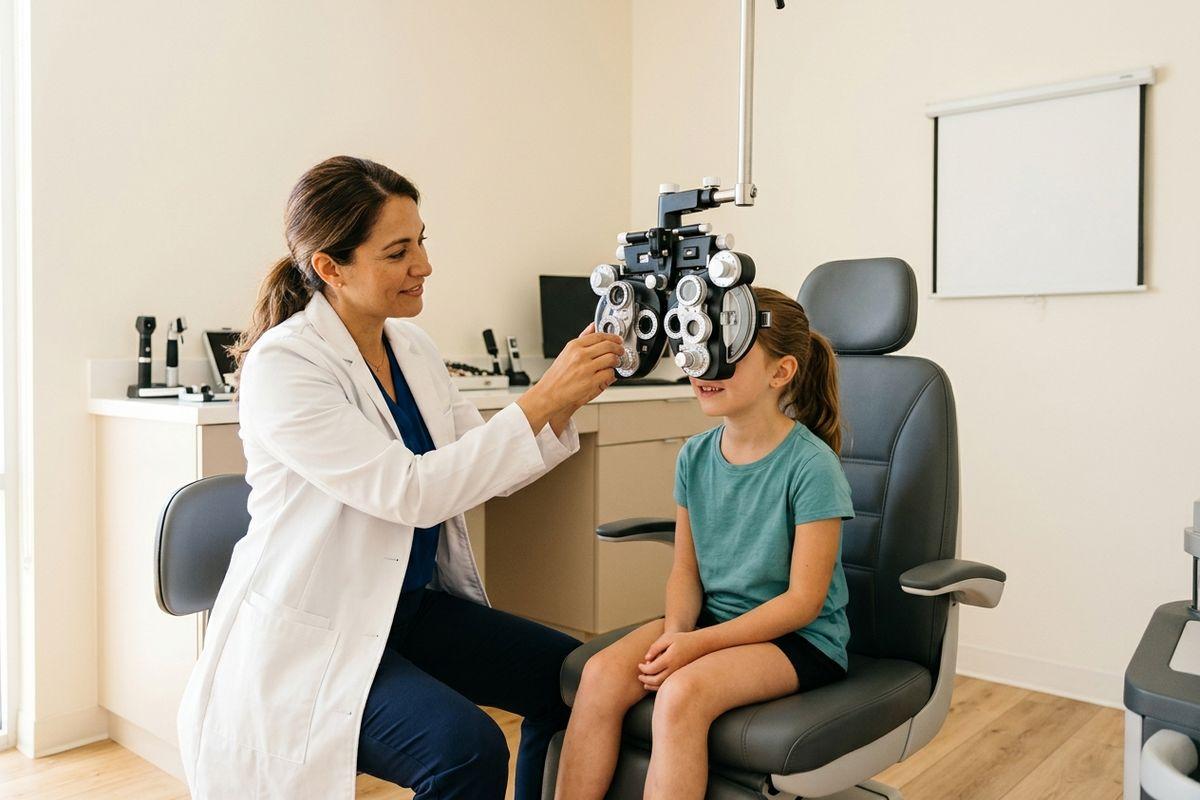
Your child’s eyes need to coordinate constantly, whether they’re copying from a whiteboard or reading at a desk. An optometrist checks how well both eyes aim at the same point, at near and far distances, then tests how quickly your child can switch focus between the two.
When that system isn’t working well, even a child with sharp distance vision can struggle to read comfortably for more than a few minutes.
Eye Tracking and Coordination
Reading takes more than clarity. Your eyes have to follow a line smoothly, jump accurately to the start of the next one, and hold a place on the page without losing it.
Your optometrist tests exactly this during a comprehensive exam. Poor tracking can slow reading speed and make reading feel like a chore, and it rarely shows up on a chart test.
Signs Your Child’s Vision May Be Holding Them Back
Kids usually don’t know their vision is off, because they don’t have anything to compare it to. Watch for these signs instead:
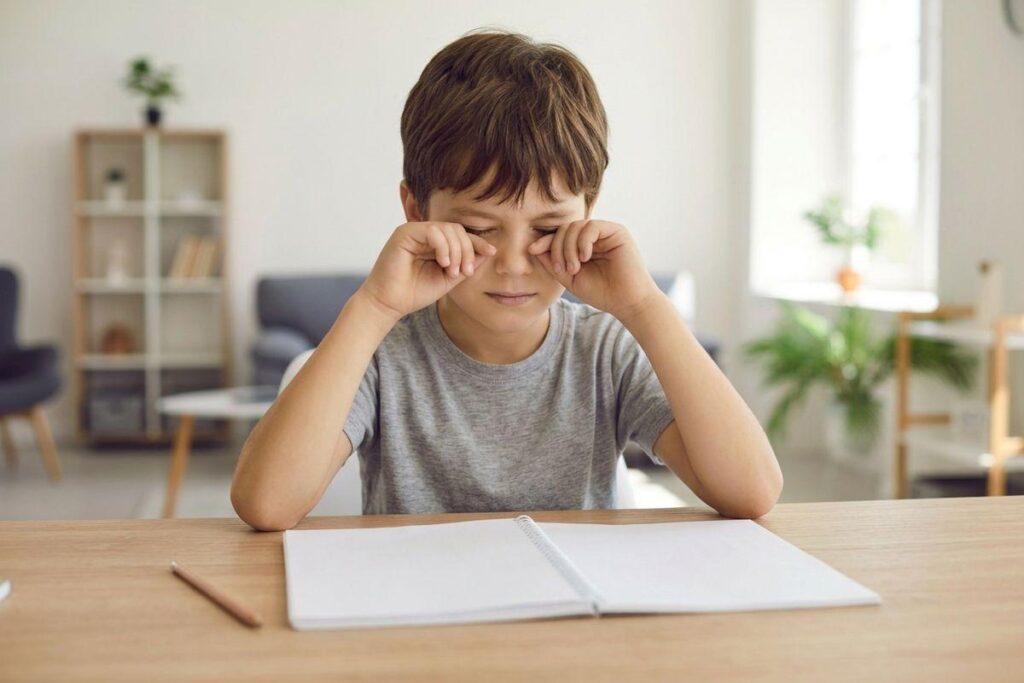
- Frequent headaches, squinting, or eye rubbing during or after schoolwork
- Skipping words, losing their place while reading, or avoiding books altogether
- Trouble focusing or falling behind in class with no clear explanation
These patterns don’t always point to a learning difficulty. Sometimes they point straight to a vision problem that hasn’t been identified yet. A few of these signs overlap with the longer list of signs your child needs glasses, which can help you decide whether it’s time to book an exam.
Myopia in Kids: Why Early Action Matters
Myopia, or nearsightedness, tends to get worse throughout childhood and the teen years.
What Myopia Does Over Time
Without management, the prescription can climb year after year as the eye grows longer to compensate for how it focuses light. Higher levels of myopia carry a greater risk of other eye conditions later in life, which is exactly why managing it early makes a real difference. Research projects that myopia will affect roughly half the global population by 2050, so it’s worth paying attention to now rather than later.
Myopia Management Options
A few different approaches can help slow myopia progression once it’s identified. Ask your optometrist about the myopia control options available for your child:
- Specialty contact lenses designed to help slow how fast myopia progresses
- Prescription eye drops used to help reduce the rate of progression
- Outdoor time and screen habit adjustments that support overall eye health
How Often Your Child Should Get an Eye Exam
Book a comprehensive exam every year for your child, especially while their vision is still developing. Don’t wait for a problem to show up first. Many vision issues don’t come with any obvious warning signs early on.
The sooner a concern is identified, the more options you’ll have for managing it. Waiting until symptoms are obvious can mean missing the window when care works best. Routine exams are one of the simplest ways to stay ahead of anything that could affect your child’s comfort and performance at school. The right cadence can vary a little based on your child’s age and risk factors.
Give Your Child’s Eyes the Full Picture
A passing grade on a school screening feels good, but it’s not the same as knowing your child’s eyes are healthy and working the way they should. A comprehensive exam finds what a screening misses, and that difference can shape how your child reads, focuses, and gets through the school day.
If your child hasn’t had a full eye exam recently, schedule one with Total Vision Solana Beach today.