

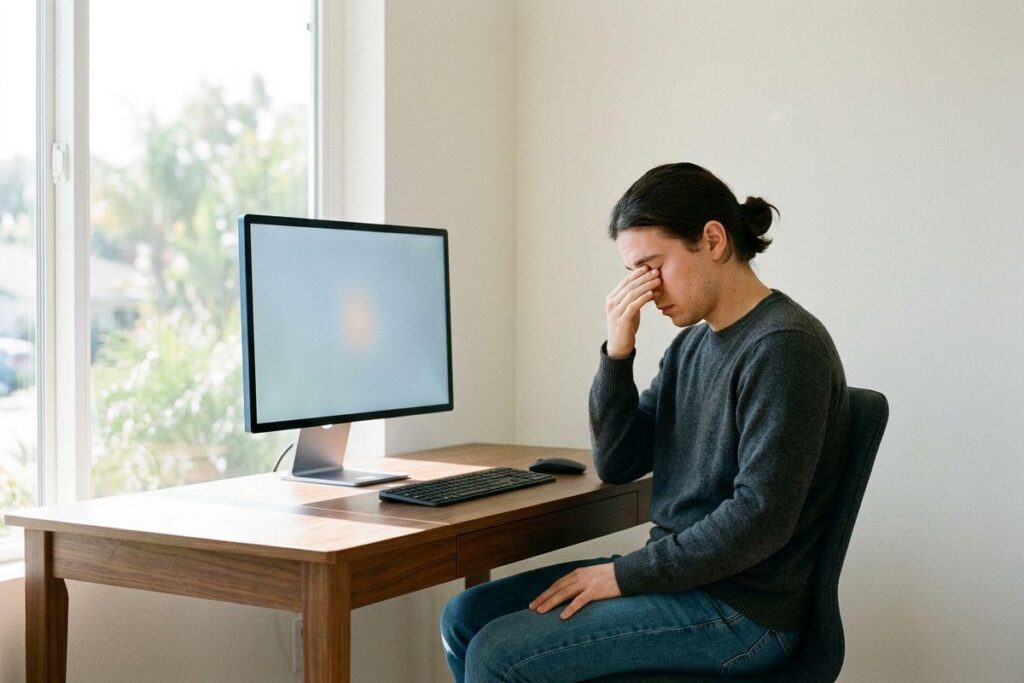
Screens ask a lot from your eyes. Holding focus at one distance for hours takes effort, and most of us blink less while reading a screen, which leaves the surface of the eye dry by mid-afternoon. A long day at a laptop can also bring on headaches instead of sore eyes, which makes the cause easy to miss.
Digital eye strain is the discomfort that builds when your eyes work harder than usual during long stretches of screen use, and a few changes to your habits and setup can ease much of it. If your day runs on a monitor, a closer look at your screen habits can help you narrow down what’s behind the discomfort.
What Digital Eye Strain Is
Digital eye strain isn’t a disease. It’s a group of symptoms that show up after long periods of screen time, and optometrists sometimes call it computer vision syndrome.
Your eyes spend those hours adjusting focus, working around reflections, and tracking scrolling, jumping text.
It shows up at every age. A 3rd grader on a tablet and a retiree on video calls can both finish the day with tired, aching eyes. Symptoms usually fade with rest, but they tend to return as soon as the same routine does.
Signs Your Eyes Are Feeling the Strain
Symptoms vary from person to person and often come and go through the day. Watch for a few of these while you work:
- Dry, gritty, or watery eyes
- Blurry vision during or after screen use
- Headaches behind your eyes or across your forehead
- A sore neck and tight shoulders
- Trouble holding your place in a line of text
A few of these together, showing up at the same point each day, usually points to your screen rather than anything else.
What Makes It Worse
Sometimes the setup around the screen matters just as much as the screen itself. Poor lighting forces your eyes to work harder to find contrast. Glare bouncing off a window behind your monitor adds extra visual noise your eyes have to sort through.
Sitting too close or at an awkward angle puts more demand on your eye muscles. And if you have an uncorrected vision problem or an outdated prescription, your eyes are already compensating before you even sit down.
Simple Ways to Give Your Eyes a Break
You don’t have to give up your screens to feel better. Start with the 20-20-20 rule: every 20 minutes, look at something about 20 feet away for 20 seconds.
Your focusing muscles get a short rest, and you’ll blink more freely while your attention is elsewhere. Closing your eyes for a few seconds can help as well, since it spreads tears back across the surface.
Quick Screen Adjustments That Help
A few changes to your setup can make the back half of the day easier:
- Drop your monitor slightly below eye level so your eyelids close more fully
- Close the blinds or add an anti-glare cover to cut reflections
- Increase the text size instead of leaning toward the screen
- Match your screen brightness to the light in the room
- Keep artificial tears at your desk for dryness that builds through the afternoon
Give any of these a week or two before you decide whether they’re working.
What an Eye Exam Can Tell You About Digital Eye Strain
When changes at home aren’t enough, book a comprehensive eye exam. Your optometrist can measure how well your eyes work together, assess your tear quality, and confirm whether your current prescription still fits what you do all day.
Mention how many hours you spend on a screen and when the discomfort peaks.
A prescription that worked 2 years ago may not hold up now, especially if your job changed or you added a second monitor.
Glasses and Lens Options for Screen Use
Some lenses are made for the distance you actually work at. Ask your optometrist about these:
- Computer or intermediate-distance lenses, which can reduce the focusing effort of a full workday
- Anti-reflective coatings, which can soften glare from overhead lighting
- Neurolens lenses, which use contoured prism to address eye misalignment that often goes unnoticed
- Vision therapy, which your optometrist may suggest when strain traces back to eye coordination
When to See an Optometrist About Digital Eye Strain
Rest and a few habit changes are enough for plenty of people. But if your symptoms stick with you hours after you’ve stepped away from the screen, or blurriness follows you into driving and reading, bring it up.
Sudden double vision, eye pain, or new light sensitivity call for a same-week appointment rather than a wait.
Make Screen Time Easier on Your Eyes
Annual exams can notice changes before they turn into daily discomfort.
Book your next exam with Total Vision Solana Beach, and we’ll go through your screen habits, your prescription, and the options that suit how you spend your day. Reach out to schedule your visit and make your week easier on your eyes.